
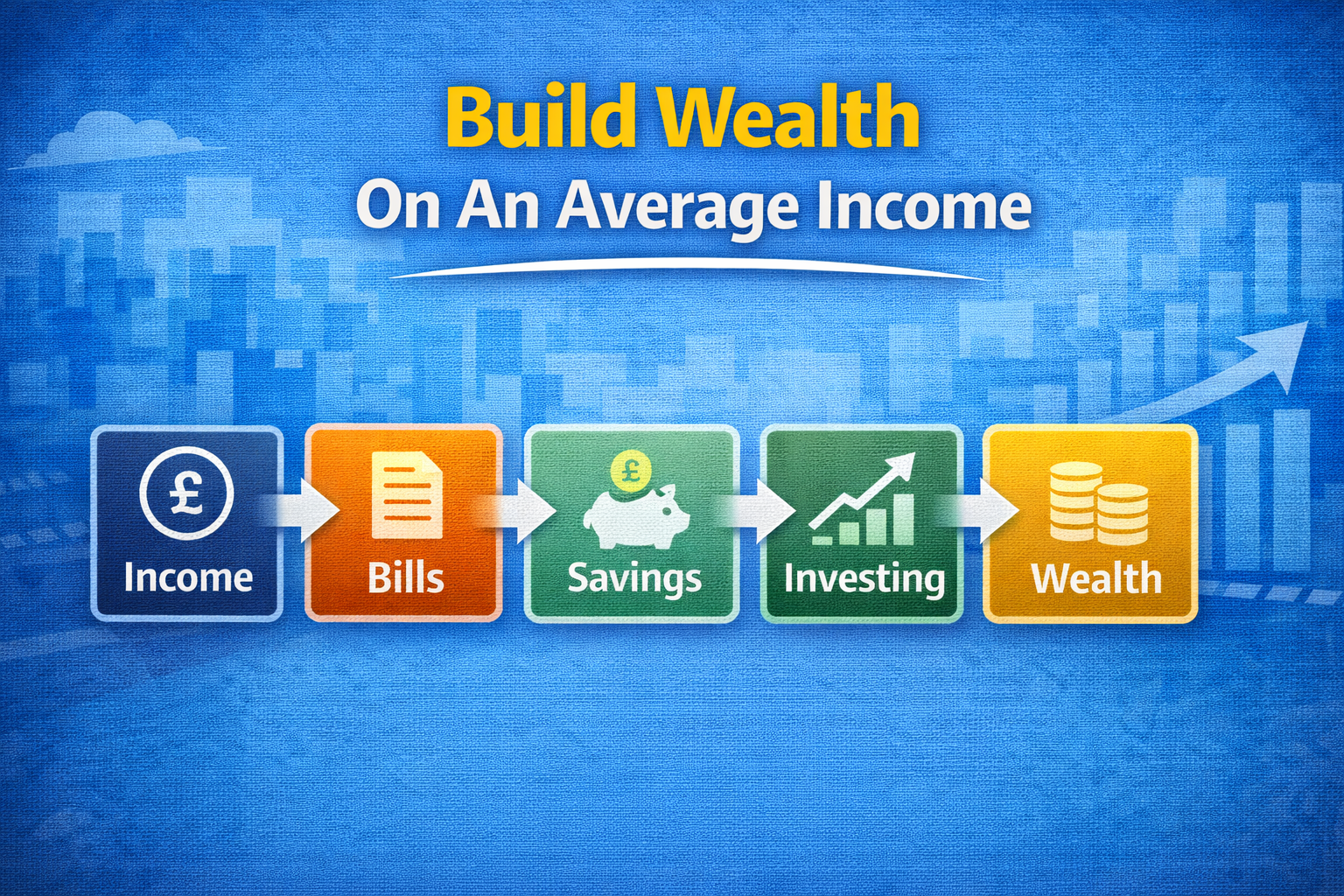
Building wealth on an average income is not a fantasy. It just requires a different mindset to what most people are taught.
Most people are raised with a hidden belief:
- “Wealth is for high earners.”
- “You need a big salary to invest.”
- “Saving is pointless because everything is expensive.”
Those beliefs feel realistic, but they create a trap. They keep you stuck in survival mode, reacting to life rather than building anything on purpose.
The truth is that wealth is not only created by income. Wealth is created by systems, and systems work even on an average salary because they remove the need for constant willpower.
If you build a system that:
- captures money before you spend it
- protects you from financial shocks
- keeps lifestyle inflation under control
- invests consistently
- increases your earning power over time
…then you can build real wealth, even if you are not on a massive income.
This post gives you a complete personal finance system for building wealth on an average income, in a way that feels practical and sustainable.
You will learn:
- Why average income wealth building is more about structure than sacrifice
- The money system that turns small amounts into serious results over time
- How to budget without feeling restricted
- How to build a buffer, eliminate high interest debt, and invest consistently
- How to use automation so you stay consistent even when life is stressful
- A monthly routine that keeps your finances moving in the right direction
Let’s build your system.
The Truth About Building Wealth On An Average Income
Most people think wealth is about earning more, and earning more is important. But if you earn more without a system, you usually just spend more.
That is lifestyle inflation.
Wealth building on an average income is about mastering three levers:
- Cash flow control
- Consistency and automation
- Compounding through investing and skill growth
If you control those three, your income level matters less than most people think.
Average Income Forces You To Learn The Right Skills
High income can hide bad habits for a while.
Average income forces you to:
- understand your numbers
- prioritise
- cut waste
- build routines
- invest consistently
These skills are exactly what build wealth long term.
Wealth Is A Gap Not A Number
Wealth is the gap between:
- what you earn
and - what you keep and invest
Even on an average income, if you keep and invest a meaningful percentage, you can build serious wealth over time.
Time Is Your Greatest Advantage
If you start early or stay consistent long enough, compounding does the heavy lifting.
You do not need to invest huge amounts at the beginning.
You need to invest steadily and increase over time.
Your Personal Finance System Must Be Simple
Complex systems collapse under stress.
A strong system is:
- simple to run
- easy to repeat
- flexible in hard months
- automatic where possible
The goal is not perfection. The goal is progress that you can sustain for years.
The Five Part Wealth System That Works On Any Income
Here is the framework. Everything else in this post is built from it.
A personal finance system for wealth has five parts:
- Clarity
- Protection
- Debt Strategy
- Automation
- Investing and Growth
If you build these in order, you will feel more in control within weeks.
Part One Clarity
Clarity means knowing:
- what comes in
- what goes out
- what you actually have left
- what your money goals are
You do not need a complex spreadsheet. You just need the truth.
Part Two Protection
Protection is your buffer.
A buffer stops every unexpected expense becoming an emotional crisis.
A buffer gives you calm.
Calm improves decisions.
Part Three Debt Strategy
If you have high interest debt, it acts like a negative investment.
You can still build wealth with debt, but you need a plan.
Part Four Automation
Automation removes the need for constant discipline.
Your system should run without you having to “be strong” every day.
Part Five Investing And Growth
Investing builds wealth.
Growth increases earning power.
Together they create compounding.
Clarity Without Stress The Simple Money Snapshot
Most people avoid budgeting because it feels restrictive or complicated.
So instead of starting with a strict budget, start with a money snapshot.
Step One Know Your Monthly Income
Write your monthly income after tax.
If income varies, use a base number:
- your lowest typical month
- or an average across the last 3 months
Do not build a plan on your best month. Build it on a realistic month.
Step Two List Your Essentials
Essentials are costs that keep life stable:
- rent or mortgage
- utilities
- food basics
- transport
- minimum debt payments
- essential insurance
- phone and internet
This list is not for judging. It is for visibility.
Step Three Know Your Non Essentials
Non essentials include:
- subscriptions
- eating out
- impulse spending
- entertainment
- random shopping
- “I deserve it” spending
Non essentials are where most money leaks.
This is where wealth building begins.
Step Four Find Your Wealth Gap
Your wealth gap is:
income minus essentials minus minimum obligations
Whatever is left is your power.
Even if it is small, you can build a system around it.
Step Five Choose A Simple Target
A good beginner goal is not “become a millionaire.”
A good beginner goal is:
- build a £500 buffer
- then £1,000 buffer
- then invest £100 a month
- then increase as income rises
Small wins build confidence.
Confidence builds consistency.
Budgeting That Builds Wealth Without Making You Miserable
The best budgeting method for wealth is the one you can actually follow.
Here is a simple approach that works on an average income.
Use A Three Bucket Budget
Instead of tracking every penny, use three buckets:
- Essentials
- Financial Goals
- Lifestyle
This removes complexity.
Suggested Percentages For Average Income
A realistic starting point for many people is:
- Essentials: 60 percent
- Financial Goals: 20 percent
- Lifestyle: 20 percent
If your essentials are higher than 60 percent, that is normal. Start where you are.
The point is to create a structure.
Inside The Financial Goals Bucket
Split financial goals into:
- buffer
- debt reduction
- investing
- reinvestment into skills or income growth
For example, if you can allocate £200 per month to financial goals:
- £50 buffer
- £50 debt
- £75 investing
- £25 skills or income growth
Adjust to your reality, but keep the pattern.
The Pay Yourself First Rule
Most people try to save what is left.
A wealth system saves first.
When you get paid:
- move money to buffer and investing automatically
- then live on the rest
This is how average income becomes wealth over time.
Build In Guilt Free Spending
If your plan has no enjoyment, you will rebel.
Choose a “guilt free spending” amount each month.
Spend it without shame.
When spending is planned, you reduce binge spending.
Review Subscriptions Monthly
Subscriptions are the silent wealth killer.
A simple rule:
Every month, cancel one thing you do not truly use.
Even small cancellations add up over a year.
Protection The Buffer That Stops The Panic Cycle
If you want to build wealth, you need stability.
Stability starts with a buffer.
What A Buffer Really Does
A buffer:
- prevents debt from growing when life happens
- reduces financial anxiety
- protects your investing habit
- stops you from making desperate decisions
Without a buffer, you end up reacting.
With a buffer, you can plan.
The Three Stage Buffer Plan
Keep it simple:
Stage 1 Mini Buffer
- £250 to £500
Stage 2 Strong Buffer
- £1,000
Stage 3 Full Emergency Fund
- 3 to 6 months of essentials
Do not obsess about stage 3 at the start.
Build stage 1. Then stage 2.
The first £500 often changes how you feel about money.
What Counts As An Emergency
An emergency is:
- unexpected
- necessary
- not part of normal spending
Not an emergency:
- a sale
- a holiday
- a new phone because you want it
The buffer is for protection, not lifestyle upgrades.
Where To Keep The Buffer
Keep it somewhere safe and accessible, but not too easy to spend:
- a separate savings account
- an account not connected to your spending card
Make it simple.
The goal is quick access when needed, not high returns.
Debt Strategy On An Average Income Without Burnout
Debt can slow wealth building, but it does not have to destroy your progress.
What matters is having a plan.
Start With The High Interest Debt
High interest debt usually grows faster than your investments.
If you have high interest debt, focus on:
- paying minimums
- building a small buffer
- then attacking the highest interest debt steadily
This is often called the avalanche method, but you do not need to label it. You just need a rule.
The Debt Plus Wealth System
Many people pause investing completely until debt is gone.
That can be psychologically hard and can delay your wealth habits.
A balanced approach:
- pay debt steadily
- invest a small amount consistently
Even £25 a month investing keeps the habit alive.
Then, when debt reduces, you increase investing.
Avoid The Shame Trap
Debt is not a moral failure.
It is a financial situation.
The system is not about shame. It is about structure.
When you remove shame, you make better decisions.
The Debt Killer Habit
Pick one habit that reduces debt faster:
- reduce one category of spending
- sell unused items
- pick up a small side income stream
- use extra income only for debt and buffer
Small actions compound.
Automation The Secret Weapon For Average Income Wealth
Automation is what makes average income wealth building possible without constant discipline.
If you automate the right things, you reduce mistakes.
Automate Savings And Investing First
Set up an automatic transfer the day after you get paid:
- buffer contribution
- investing contribution
Even if it is small, automate it.
Automation turns good intentions into results.
Use A Bills Account And A Spending Account
If you struggle with overspending, use two accounts.
- bills account: salary comes in, bills go out
- spending account: you transfer a set amount weekly
This creates boundaries without feeling restrictive.
Use The Weekly Allowance System
Instead of tracking every purchase, give yourself a weekly spending amount.
When it runs out, you stop spending until next week.
This simple method controls spending without stress.
Automate Your Reviews
Put a monthly reminder in your calendar:
- review subscriptions
- check your buffer
- check investment contributions
- adjust if needed
This makes the system feel routine, not emotional.
Investing On An Average Income The Simple Approach
You do not need to be a stock market genius to build wealth.
You need consistency.
Start With The Habit Not The Perfect Portfolio
Many people delay investing because they want the perfect strategy.
The truth is:
- a simple consistent strategy beats a perfect strategy you never start
Start with:
- a small amount monthly
- increase over time
Invest Monthly No Matter What
Monthly investing builds a powerful habit.
Even if the market goes down, you keep investing.
Over time, you benefit from buying at different prices.
This is how long term investors stay calm.
Increase Investing When Income Rises
A wealth system has a rule:
- every time your income rises, you increase investing
If you get a pay rise, do not spend it all.
Increase investing first, then enjoy some lifestyle improvement.
That is how average income becomes wealth.
Keep Investing Separate From Your Buffer
Do not invest money you might need next month.
Your buffer is for emergencies.
Your investments are for long term growth.
Keeping them separate protects you from panic selling.
Investing And Digital Wealth Work Together
If you are building online income, investing makes it stronger because:
- you are converting income into assets
- you are reducing dependence on one platform
- you are building long term stability
This is how side income turns into financial freedom over time.
Increasing Your Wealth Without Raising Income Overnight
It is true that higher income helps.
But you do not need a huge salary increase to build wealth.
Small improvements compound.
The Waste Audit
Once a month, do a quick audit:
- what did I spend money on that I did not value
- what subscriptions can I cancel
- what purchases were emotional
- what could I reduce without pain
Then make one change.
One change per month is 12 improvements per year.
That is massive.
Raise Your Earning Power Slowly
On an average income, the smartest path is often:
- build a skill
- increase your earning power
- use the increase to invest more
Skills that increase earning power:
- writing
- editing
- SEO
- digital marketing
- sales
- coding
- design systems
- project management
This ties directly into digital wealth building.
You can increase income through:
- side hustles
- freelancing
- digital products
- blogging and affiliate income
Then your finance system captures that income and turns it into wealth.
The Reinvestment Rule
If you earn extra online, use a rule like this:
- 50 percent to buffer and investing
- 30 percent reinvest into skill or business growth
- 20 percent lifestyle enjoyment
This keeps you motivated but still moves you forward.
The Monthly Wealth Routine That Keeps You On Track
A system must be run to work.
Here is a simple routine.
Weekly 10 Minute Check
- check balances
- confirm bills are covered
- transfer money if needed
- keep spending on track
Monthly 45 Minute Reset
- total your income
- check your essentials spending
- review subscriptions and cancel one
- allocate money to buffer, debt, investing
- increase investing if possible
- choose one improvement for next month
The point is not perfection.
The point is steering.
Quarterly Review
Every 3 months:
- check progress against your goals
- adjust your system
- increase investing if possible
- plan a small reward for consistency
This keeps motivation high.
Final System Summary
If you want the full system in simple steps, use this:
- Know your monthly income and essentials
- Build a mini buffer of £250 to £500
- Automate saving and investing the day after payday
- Use a three bucket budget essentials, financial goals, lifestyle
- Attack high interest debt steadily while keeping small investing habits alive
- Review subscriptions monthly and cancel one unnecessary expense
- Increase investing whenever income rises
- Run a weekly 10 minute check and a monthly reset
- Focus on skills that increase earning power over time
- Stay consistent for 12 months and let compounding work
If you follow this on an average income, you will build something most people never do.
Not because you earned a fortune.
Because you built a system.
And systems create wealth.
Disclaimer
This article is for educational and informational purposes only and does not constitute financial, legal, tax, or professional advice. Any examples are illustrative and may not reflect your personal circumstances. Always do your own research and consider speaking with a qualified professional before making financial decisions.